Referee’s Whistle Cinema: Six British Science Films Where the Paperwork Steals the Scene
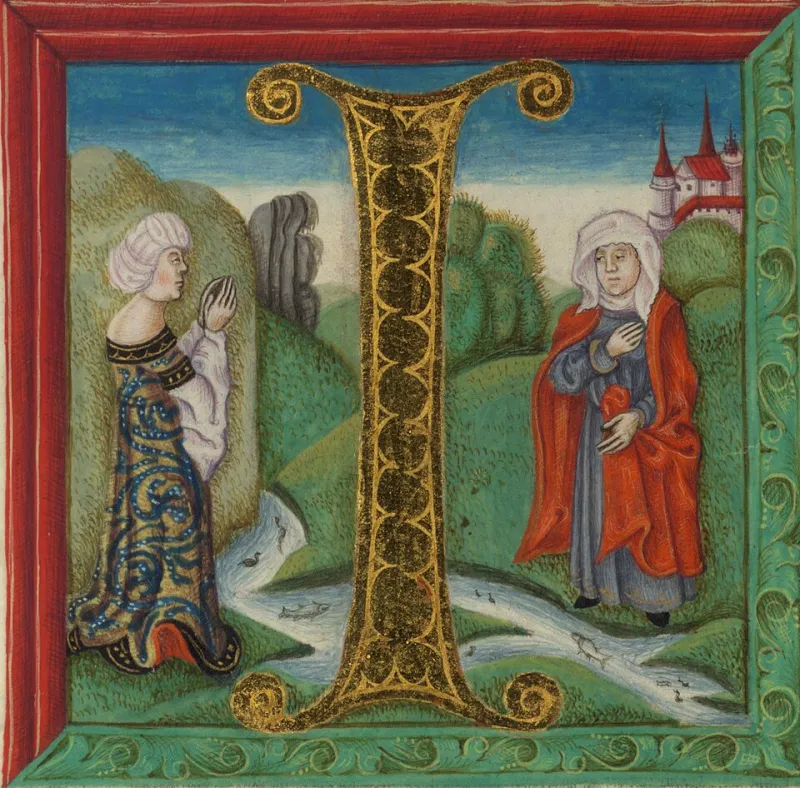
Photo: Walters Art Museum Illuminated Manuscripts, CC0, via Wikimedia Commons
Peer review is the least cinematic thing in science, which is exactly why it keeps turning up on British screens. You can keep your lightning machines and smoking beakers. Give me a tired academic in a cardigan, a manuscript covered in red pen and a cup of tea that has gone cold, and I will give you tension. Here at Mad Science Films we have long suspected that the best science drama is not the eureka moment but the email that begins: ‘Thank you for your submission. We have received reports from two referees.’
That sentence has launched a thousand sighs in UK labs. It is also, in the right hands, comic gold. British science films and documentaries tend to treat peer review not as a sacred ritual but as a social obstacle course: part job interview, part parents’ evening, part passive-aggressive note left in a shared kitchen. The humour comes from the collision between enormous ideas and very small human procedures.
The actual mechanics, briefly
Peer review is quality control by colleagues. For a journal paper, an editor sends your manuscript to independent experts, usually anonymously. They recommend accept, revise or reject, and you respond with a revised draft and a letter explaining what you changed and what you politely declined to change. For grants, a panel scores proposals and argues about them in a room with bad biscuits. At conferences, the Q&A is peer review with lighting and an audience. Corrections and retractions are the paper trail’s final act.
It is not glamorous. It is not meant to be. But it does produce a peculiar kind of drama: power without spectacle, expertise without certainty, and the eternal suspicion that Reviewer Two has misunderstood chapter three on purpose. The six titles below are not all ‘peer review movies’ in the strict sense. They are British science films and docs where the bureaucratic apparatus — the letter, the viva, the committee, the clearance form — becomes the most watchable character.
1. The Race for the Double Helix (BBC, 1987): the referee as rival
This BBC film about the discovery of DNA’s structure is usually remembered for egos, ethics and Photograph 51. It is also a masterclass in the manuscript as duel. Every draft is a move; every conversation is a potential citation; every congratulatory note carries a faint smell of priority dispute. The film understands that publication is not the end of the argument but the moment the argument gets an audience.
There is no actual referee report in the middle of the drama, but the spirit is there. The manuscript is not a document. It is a fencing match with footnotes. And the phrase ‘we are grateful to colleagues for useful discussions’ has never sounded less sincere.
2. The Man Who Knew Infinity (2015): the letter that says ‘revise and resubmit’
Ramanujan’s letters to G. H. Hardy are the closest thing mathematics has to a cold-call email that changes a life. The film turns academic correspondence into a thriller: formulas arrive from India, Hardy squints, colleagues doubt, and the whole thing hinges on whether the work can survive the institutional gatekeepers of Cambridge and the Royal Society.
Every UK PhD student who has received a reviewer comment asking for ‘clarification of the methodological rationale’ will recognise the dynamic. The film’s comedy is not slapstick. It is the comedy of somebody with a once-in-a-century mind being asked, in effect, to please format the references correctly.
3. The Theory of Everything (2014): the viva as public execution
Stephen Hawking’s early academic life gives the film its best odd-couple drama: giant cosmology, tiny corridors, and the peculiar British theatre of the PhD viva. The examination room is a courtroom, a job interview and a family dinner all at once. The examiner’s raised eyebrow is the special effect. No explosion is required when somebody says, mildly, ‘I think chapter two needs work.’
What makes the scene land is its restraint. British screen science often gets its laughs from embarrassment rather than spectacle. The universe is expanding; the candidate is not. That is the joke, and it is a good one.
4. Hawking (BBC, 2004): the committee room as coliseum
This BBC drama has the texture of a departmental meeting that has run past five o’clock. The science is enormous, but the humiliation is small and human: forms, approvals, academic scepticism and the sense that progress is being negotiated by people with diaries. It is peer review in spirit — a room full of clever people deciding whether to take you seriously.
Ask any UK postdoc about their first grant panel and you will get a story involving cold coffee, a misplaced appendix and a reviewer who wanted more ‘blue-sky thinking’ in a project about drainage. The film knows that mood. The committee room is a coliseum, but the lions are all wearing lanyards.
5. The Imitation Game (2014): security vetting as peer review
Bletchley Park’s secrecy apparatus is a referee report with a gun. Alan Turing’s work is assessed not only by mathematicians but by security officers, civil servants and the general suspicion of anyone who is difficult to classify. Reviewer Two is MI6. The comments are less ‘please clarify your methods’ and more ‘please explain yourself to the state.’
It is not a documentary, and it plays fast and loose with history, but the bureaucratic comedy is unmistakably British: forms, clearances, the fear of a letter, and the terrible suspicion that the most dangerous thing in the building is a filing cabinet with the wrong label.
6. Horizon: The Pleasure of Finding Things Out (1981): the Q&A as correction
Richard Feynman’s BBC Horizon film is not about peer review, but it contains the best defence of it: the demand that scientists not fool themselves. Feynman’s talk of ‘cargo cult science’ is peer review as honesty, not bureaucracy. And the interview format gives the whole thing the feeling of a conference Q&A where somebody in the third row is about to say, ‘Sorry, but have you considered…’
That is the secret weapon of British science telly. The cardigan count is high; the stakes are higher. The humour comes from watching a brilliant person being asked a simple question and discovering that the simple question is not simple at all.
The last word
Peer review is not the enemy of good science, and it is not the friend of good television either. It is a process built from human judgement, which means it is occasionally wise, occasionally maddening and frequently funny. The best British science films know that the paper trail is not a distraction from the drama. It is the drama, just with more tea and fewer explosions.
So next time you watch a scientist on screen, spare a thought for the unseen referee. Somewhere, in a kitchen in Leeds or a office in Bristol, somebody is reading a manuscript with a red pen and thinking: ‘This needs work.’ That, dear viewer, is cinema.