Interval With Intent: How British Picture Houses Made Science the Warm-Up Act
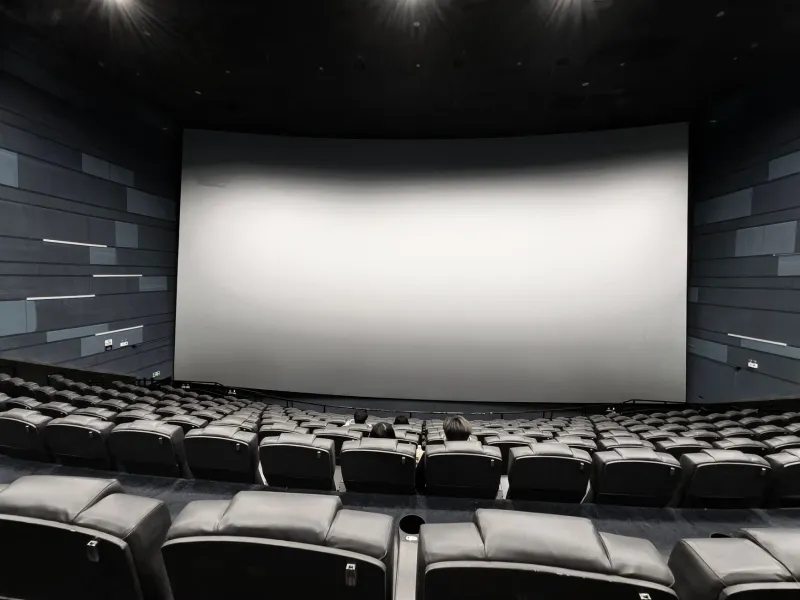
There is a particular smell to an old British picture house: dust, velvet, a hint of someone else's boiled sweet. Less well remembered is what sometimes happened before the feature — not a trailer, not an advert for the local chip shop, but a person on a small stage doing science at you. The audience was not merely watching. It was, in a modest and voluntary way, part of the apparatus.
This is not a canon. It is a scrapbook of a half-forgotten habit: the live science turn as cinema warm-up. Some of it was educational, some of it was pure music-hall hokum, and some of it was a man with a magic lantern asking a room full of strangers to trust their own eyes. In 2026, when cinemas are competing with everything a phone can do, there is something useful in that old trick.
The lantern lecture had a captive audience
Before cinema proper, the Royal Polytechnic Institution on Regent Street was already packing rooms for illustrated science lectures. Magic lanterns, dissolving views, optical illusions — the technology was different, but the social contract was familiar: sit in the dark, look at a bright rectangle, and let someone explain what you are seeing. The audience was often invited to judge the trick. Was the ghost moving? Did the colour vanish? Could you spot the fake?
That is the key. The audience was not a passive blob in the dark. It was a jury. A collective set of eyeballs being gently tested. Early cinema inherited that arrangement and then, for a while, kept it alive by putting a live body in front of the screen.
Six slots from the scrapbook
These are representative types rather than a definitive census. Britain had hundreds of fleapits, halls and picture palaces, and not all of them kept careful minutes.
1. The Polytechnic soirée
The Victorian and Edwardian equivalent of a science variety night. A lecturer, a lantern, a few brass instruments and a room willing to be amazed. The demonstration was the headline act, not the supporting feature. The audience was invited to count, guess and gasp.
2. The 1896 X-ray craze
When news of Röntgen's rays reached Britain, music halls and early film shows discovered a gift: the idea that you might see your own skeleton. Some of it was genuine demonstration; some was fairground flummery. Either way, the punter became the specimen. The audience was not looking at a diagram. It was looking at itself, or at least a saucy cartoon version of itself.
3. Saturday morning pictures
Generations of British children were parked in cinemas on Saturday mornings with a bag of sweets and a cartoon. The more ambitious venues added a live turn: a visiting 'professor' with a Van de Graaff generator, a hair-raising volunteer and a lot of giggling. It was science as playground dare, which is not the worst teaching method ever devised.
4. The post-war adult education slot
Local colleges and education committees occasionally used cinema screens for illustrated talks before the main film. The tone was earnest, the slides were probably dreadful, and the demonstrator may have been a chemist from the technical college. But it put a working scientist in the room, which is more than most documentaries manage.
5. The museum roadshow
By the 1970s and 1980s, science museums and regional film theatres were experimenting with live explainers: bubbles, liquid nitrogen (with proper gloves), Cartesian divers and the reliable theatre of things that fizz. The setting was still cinematic, but the action was right there in the aisle.
6. The education screening compère
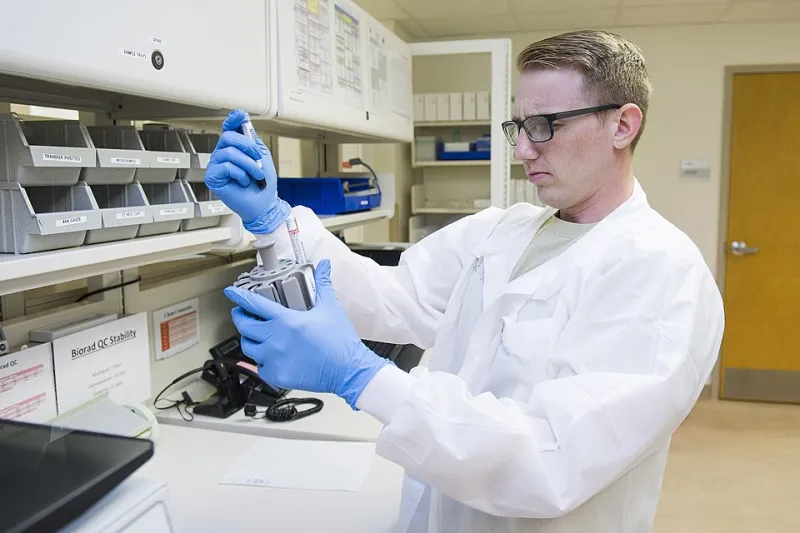
In the 1990s, film education screenings sometimes came with a live host. Not quite a lecturer, more a lab-coated compère: here is what to watch for, here is a quick demo, now enjoy the film. It was a bridge between the old lantern lecture and the modern post-screening Q&A.
Why the format worked
Three reasons. First, the audience was already seated and already quiet. A cinema is a captive crowd with its phones off — or, in 2026, at least dimmed. Second, the demonstration was short. Nobody was asked to sit through a lecture on thermodynamics. They were asked to watch a coin disappear and then be told why. Third, it was communal. A gasp is better when shared.
The old showmen understood something that modern science communication sometimes forgets: the room is part of the experiment. If the audience can see the trick, predict the trick, or volunteer for the trick, they are no longer watching science from a distance. They are in the apparatus.
Three low-budget demos for a 2026 foyer
None of these need a laboratory. All of them need a risk assessment and a demonstrator who knows when to stop.
- The vanishing coin. A coin under a glass, a saucer of water, and a viewing angle. Refraction does the rest. The audience can be asked to predict where the coin will reappear. It is cheap, repeatable and almost impossible to over-dramatise.
- The Cartesian diver. A bottle of water and an eye dropper. Squeeze the bottle and the diver sinks; release and it rises. It is a pressure demonstration that fits in a coat pocket and never fails to make at least one person say 'go on, again'.
- The self-inflating glove. Bicarbonate of soda, vinegar and a rubber glove. The glove stands up like a rude hand. It is a classic for a reason: visible, quick and memorable. Keep quantities small, ventilate the space, and do not let anyone drink the results.
A cinema could run one of these in the five minutes before the lights go down. Not every screening. Not as a gimmick. Just as a warm-up that says: tonight, we are going to look at something together.
The caution: safety theatre is not safety
Here is where the fond nostalgia needs a hard brake. Some of the old demonstrations got away with things that would — and should — fail a modern risk assessment. Flames, high voltages, dubious chemicals and a cheerful disregard for personal space are not charming traditions. They are liabilities.
In the UK, a public demonstration needs proper risk assessment, insurance and attention to fire regulations and COSHH where relevant. Goggles are not a costume. A lab coat is not a personality. The best demo is the one that looks risky and is not, rather than the one that looks safe and is quietly a bad idea. Safety theatre — the performance of precaution without the substance — is worse than no theatre at all, because it teaches the audience the wrong lesson.
The interval is the experiment
The old picture-house science turn was never a documentary. It was a live event with a screen behind it. It made science feel like a night out rather than a homework assignment. In 2026, British cinemas could borrow that idea without rebuilding the Polytechnic: a short, well-rehearsed, low-budget demonstration before the feature, hosted by someone who knows what they are doing and why.
Bring back the warm-up. Not to make every cinema a science museum. Just to remind the audience that, for a few minutes, they were the experiment — and they quite enjoyed it.