Beer Mat Methodology: Six British Science Films That Do Their Best Work at the Bar
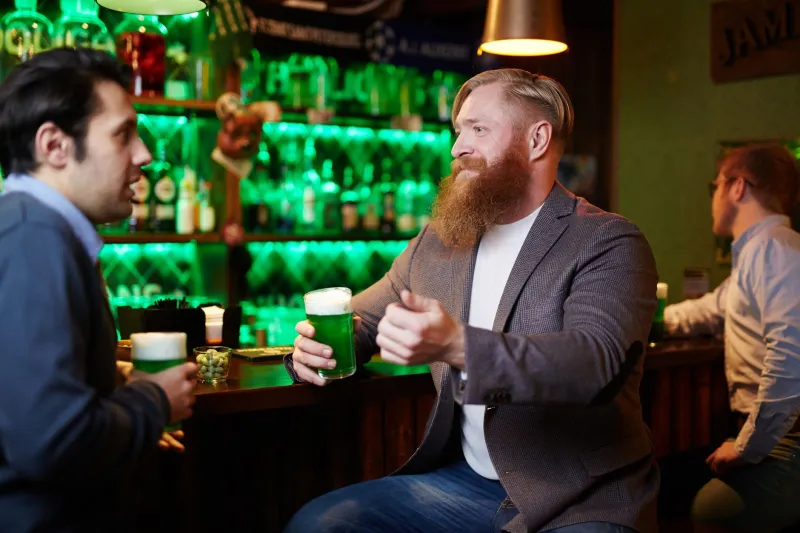
British science on screen has a predictable rhythm. Lab coat, microscope, moment of doubt, breakthrough, and then — crucially — the pub. Not the conference hall, not the journal club, not the bit where someone reads out a p-value. The pub. It's where the technician explains the anomaly, the professor admits the grant ran out, and the landlord asks the question everyone was thinking. In British science films, the pub is the unofficial results section, and it's about time we admitted it.
The Pint-Sized Peer Review
The pub debrief is a very British form of peer review. It's informal, sceptical, and fuelled by salt and vinegar crisps. Unlike a journal referee, the person propping up the bar doesn't care about your h-index. They care whether your explanation makes sense. They will interrupt. They will ask 'but why didn't you just...' and they will not accept 'it's complicated' as an answer. This is exactly what science communication needs: a test of clarity under mild social pressure.
On screen, the pub scene does something clever. It strips away the lab's authority. The scientist has to explain the work in a room where they are not the smartest person present — the landlord has a PhD in changing barrels, and the regular in the corner has seen it all. The pub is a level playing field, and that's why it works.
Six Films That Save Their Best Thinking for the Bar
Here are six British science films and documentaries where the pub debrief is not an afterthought but the whole point.
-
The Secret Life of Chaos (BBC Four, 2010) – Jim Al-Khalili spends an hour on butterfly effects and fractal ferns, then ends up in a pub to ask whether chaos is just order we haven't understood yet. The pint is not a prop; it's a thinking aid.
-
Chemistry: A Volatile History (BBC Four, 2010) – Al-Khalili again, this time on the periodic table. The final scene finds him in a pub, comparing the elements to a well-kept cellar: organised, surprising, and occasionally explosive. It's the most British metaphor for chemistry ever filmed.
-
The Story of Electricity (BBC Four, 2011) – The series ends not with a bang but with a pint, as the team debate whether electricity is a substance or a behaviour. The pub's flickering lights provide an accidental demo.
-
The Code (BBC Two, 2011) – Marcus du Sautoy takes his mathematical revelations to a pub, where he explains the Fibonacci sequence using beer mats and a pint of bitter. The landlord looks unconvinced. Du Sautoy persists. That's peer review.
-
The Big Life Fix (BBC Two, 2016–2018) – The inventors and engineers often retreat to the pub after a build, where the real design review happens over a bag of pork scratchings. The problem is never just technical; it's whether the thing works after two pints of Timothy Taylor's.
-
Trust Me I'm a Doctor (BBC Two) – The presenting team's debriefs often happen in a pub, where medical jargon gets translated into something you can order at the bar. It's less 'here's the evidence' and more 'here's what it means for your Sunday roast'.
Why the Landlord Is the Ultimate Exam Invigilator
The pub setting is not just cosy. It's a test. In a lab, the scientist controls the questions. In a pub, anyone can ask one. The landlord wants to know if the experiment will affect the price of a pint. The regular wants to know if it will cure their bad back. These are not trivial questions. They are the questions that force a scientist to say what they actually mean.
British science films understand this. They use the pub to humanise the work without dumbing it down. The result is a rare thing: a science documentary that ends with a conversation, not a conclusion. The data is still there, but it's been through the wringer of a Friday night.
The Tab Problem
Of course, the pub debrief can be staged. There's a fine line between 'scientists are people too' and 'look, scientists drink beer like you'. Some films lean too hard on the latter. But when it works, it works because the pub is genuinely where the messy bits of science get sorted out. It's where the failed experiment becomes a funny story. It's where the technician gets to be the hero. It's where the professor admits they don't know.
In 2026, as science gets more complex and more polarised, the pub debrief feels more necessary than ever. We need places where experts have to explain themselves without a lectern. We need landlords who ask awkward questions. We need beer mats with equations on them.
Last Orders
So next time you watch a British science film, wait for the pub scene. It's not a cop-out. It's the results section. The data has been collected, the graphs have been drawn, and now it's time for the real test: can you explain it to someone who just wants to know if it's their round? That's peer review, British style. And it's better with a pint.