Cloudburst Cinema: Six British Science Docs That Filmed the Forecast Instead of the Plan
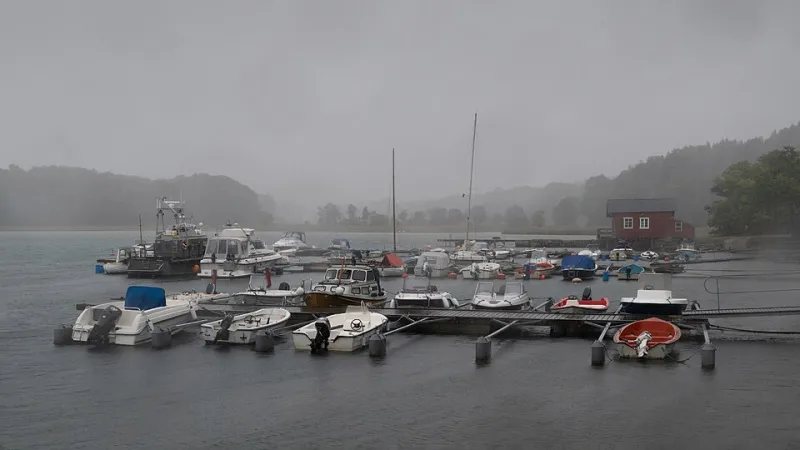
Photo: W.carter, CC0, via Wikimedia Commons
There is a particular sound in British factual telly: a producer saying “we’ll give it twenty minutes” while rain hammers the roof of a hire van. It is the sound of a storyboard dying. It is also, occasionally, the sound of a documentary getting good.
Science filming loves a plan. You want the cloud chamber at noon, the transect at low tide, the puffin count before the light goes. Britain, meanwhile, loves to send a low-pressure system directly through the middle of your shooting schedule. The result is usually misery, soggy sandwiches and a insurance claim. But sometimes the weather wrecks the plan so thoroughly that the crew stops pretending and starts filming what is actually happening. That is when the science gets interesting.
Here are six UK shoots where rain, fog, wind or a rogue cold snap turned a tidy science documentary into something messier, stranger and better.
1. The Cloud That Refused to Be a Backdrop
A 2026 documentary about cloud microphysics had planned to follow an instrumented aircraft through orographic cloud over the Cumbrian fells. The aircraft stayed on the ground. Low cloud, gusting wind, and a forecast that changed its mind every ninety minutes meant the flying plan was scrapped before lunch.
The crew did what any self-respecting British unit does: they went up a hill instead. From a fellside near Buttermere, they filmed the cloud forming, spilling and dissolving over ridges in real time, while the scientist explained that the very conditions keeping the plane grounded were the conditions producing the clouds she wanted to study. “We lost the aircraft and gained the mechanism,” she told the director. The sequence became the film’s centrepiece: not a neat diagram, but a grey Cumbrian sky doing the physics in public.
2. Storm Transects and the Wrack Line
On the Cornish coast, a coastal ecology shoot had a crisp plan: quadrats, rocky-shore transects, a tidy story about zonation. Then an autumn storm rearranged the beach. The transects were buried, the marker pegs were somewhere off Land’s End, and the crew spent a morning filming a researcher laughing in the way people laugh when the sea has just deleted their methodology.
The fallback was the strandline: the messy ribbon of seaweed, plastic and dead things left by the tide. It turned out to be a better film. The researcher talked about decomposition, nutrient cycling and how storms reset the whole coastal system. A soggy, wind-battered segment on wrack-line ecology ended up saying more about disturbance than the original script ever could. The weather had not ruined the science. It had supplied the plot twist.
3. Fog, Lichen and the Long Lens
A documentary about lichen and air quality on the Isle of Skye had budgeted for crisp Highland views. It got fog. Not atmospheric, romantic fog. Just a grey duvet sitting on the landscape for three days.
With the wide shots gone, the director switched to macro. The crew filmed lichen communities on rock and bark in the damp, diffuse light, and the researcher explained how moisture, not just pollution, shapes what grows where. Fog became the subject rather than the obstacle. “You can’t film a gradient in this,” the director said, “but you can film a habitat.” The resulting sequence was slower, closer and oddly gripping: a tiny wet world that most viewers would otherwise have walked past. The weather had forced the camera to look properly.
4. The Bog That Bubbled Back
Peatland carbon projects are not usually blessed with visual drama. A shoot in Snowdonia had planned to film a nice, orderly gas-flux measurement. Then the rain arrived, the water table rose, and the bog began doing something unbecoming: bubbling.
Methane bubbles trapped in the peat started surfacing in the flooded pools. The crew abandoned the schedule and filmed them. The scientist, initially worried about the equipment, got visibly excited as the bubbles popped through the surface. The segment became a simple, brilliant demonstration of anaerobic decomposition: the bog breathing out. The rain had made the invisible visible, and the documentary got a scene that no amount of careful lighting could have manufactured.
5. Snow in the Wrong Place
A Cairngorms shoot on snow ecology had planned to follow a neat seasonal story: snow arrives, animals respond, spring returns. Instead, an unseasonal dump landed in the wrong week, covering the lower slopes and leaving the high tops bare. The crew’s planned access routes vanished. The camera traps, however, kept working.
The footage showed animals moving through snow at elevations where they were not supposed to be that month. The researcher was cautious on camera, as good researchers are, but the sequence had a genuine edge: a changing mountain, a surprised field team, and a reminder that ecological timing is not a neat calendar. The weather had turned a tidy seasonal film into a question mark. That is usually an improvement.
6. The Heatwave That Wasn’t
On the Norfolk Broads, a reedbed methane shoot had been built around a long, hot spell. The crew arrived to find a cold snap instead. Fleeces came out, the gas-flux kit sulked, and the presenter’s shirt stayed on.
But the cold snap revealed something the heatwave plan would have missed: how quickly microbial activity in the reedbed responded to temperature. The researcher ran a comparison, the crew filmed the numbers coming in, and the piece ended up being about sensitivity rather than sunshine. It was less pretty than the original plan and more useful. The weather had provided a control condition nobody had budgeted for.
The Uncredited Collaborator
None of this is an argument for abandoning preparation. It is an argument for leaving room in the schedule for the sky to interrupt it. British science documentaries are often at their best when they stop pretending to be in charge. A good field scientist already knows this; a good director learns it somewhere between the third weather warning and the second flask of tea.
The next time a UK shoot loses a day to rain, fog or a baffling cold snap, watch what happens. The crew may grumble, the call sheet may curl at the edges, and the producer may develop a twitch. But if they keep rolling, they might just film the thing the storyboard could never have predicted: science happening in the actual weather. Britain is very good at that. It has had plenty of practice.