Please Hold: Six British Science Films That Make the Baseline the Main Event
Photo: R6, State & Private Forestry, Forest Health Protection, Public domain, via Wikimedia Commons
There is a moment in every science documentary when the music drops, the presenter stares at a clipboard, and the viewer is asked to care about a graph that has not moved. That is the control. It is not glamorous. It is the kettle boiling in the corner of a thriller. But without it, the dramatic result is just a rumour with a lab coat. British science film has a long, quietly stubborn affection for these bits. Maybe because we like queues. Maybe because the NHS trained us to trust a baseline. Either way, here are six British examples where boring is not a failure of pacing; it is the plot.
1. The Joy of Data (BBC Four, 2016)
Hannah Fry's film is about information, but its best scenes are about absence. Before the beautiful visualisations, there is the mundane business of collecting clean data and waiting for a signal to emerge. The baseline is the hero: no baseline, no pattern. The editor's temptation is to cut from question to revelation. The film resists. It lets the null result sit there like a British person at a party who has not been introduced. That patience is the point.
2. The Brain: A Secret History (BBC Four, 2011)
Michael Mosley's series is full of the gothic stuff — electrodes, strange cases, the history of people doing unwise things to brains. But the placebo thread is the quiet star. A control group is not a plot twist; it is the plot. The programme makes you watch the ordinary comparison because the extraordinary claim is worthless without it. It is the televisual equivalent of checking the oven is actually on before blaming the recipe.
3. The Placebo Experiment: Can My Brain Cure My Body? (BBC Two, 2018)
A documentary about placebo is basically a documentary about the control group getting a promotion. The participants know something is up, the scientists know they know, and the viewer is asked to hold several uncertainties at once. The dramatic result only lands because the film has shown the machinery: who got what, who knew, who felt better anyway. It is a masterclass in making administration feel like suspense. Not many shows can make a consent form gripping. This one comes close.
4. The Secret Life of Chaos (BBC Four, 2010)
Jim Al-Khalili's film is about patterns emerging from simple rules, and it is honest enough to show the repetitions. A simulation that produces a beautiful pattern on the fifth run is not magic; it is a baseline with a decent publicist. The film keeps the repeats in, which is why the eventual reveal feels earned rather than conjured. It also confirms a great British truth: if you watch anything long enough, it either becomes fascinating or it becomes weather.
5. Precision: The Measure of All Things (BBC Four, 2010)
This is a series about the unglamorous infrastructure of measurement, which sounds like a cure for excitement until you realise that calibration is just the control group in a hi-vis jacket. The baseline here is a standard: the thing you compare everything else to. The film makes room for the tedious checks because without them, precision is just confidence with a ruler. It is the television equivalent of a spirit level. Nothing happens, beautifully.
6. Chemistry: A Volatile History (BBC Four, 2010)
Chemistry on screen loves a bang. This series knows that the bang is only meaningful if you have seen the same reaction fail, or produce a disappointing sludge, or work only when the apparatus is clean. The repeat run is the control group's revenge. The film gives space to the bench routine — the weighing, the waiting, the washing up — and the result is a history of ideas that feels like it was made by people who have actually smelt a lab. The dull bits are not filler. They are the evidence.
Why the dull bits survive the edit
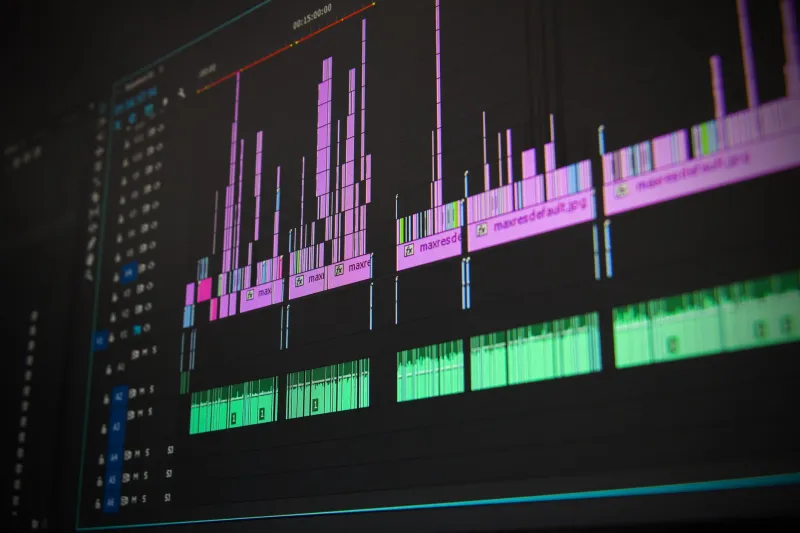
Ask anyone who has sat in an edit suite and they will tell you the same thing: the control group is always the first thing on the chopping block. It does not trailer well. It does not fit the three-minute slot. It does not make a thumbnail. Researchers fight for it because without it the film is just a magic trick with a voiceover. Editors fight for it because, secretly, they know a reveal without a baseline is a sugar rush. The best British science films tend to be the ones where the argument is allowed to breathe, where the placebo is not a punchline, and where the long wait is treated as part of the method rather than a failure of the schedule.
The kettle, the clipboard, the truth
There is a very British pleasure in watching someone do the sensible thing slowly. The control group had a camera, and thank goodness. It gives the drama something to push against. It also gives the viewer a job: to compare, to doubt, to wait. In an age of instant explanation, that is oddly radical. So next time a science documentary pauses to show a graph that refuses to move, do not reach for the remote. That flat line is doing more work than the explosion. It is the baseline, and it is the star.