Hazard Lights: Six British Safety Reels That Made Lab Risk Look Weirdly Cinematic
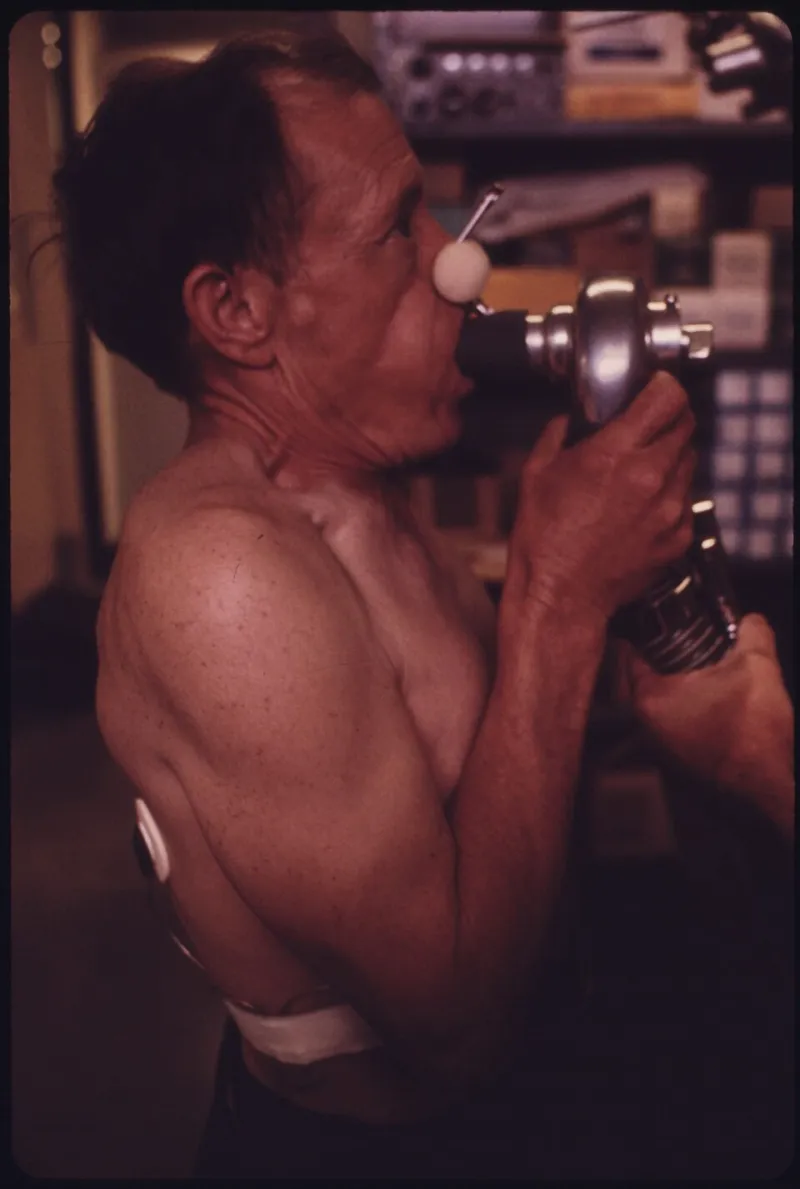
Photo: Jack Corn, Public domain, via Wikimedia Commons
There is a particular kind of British instructional film that begins with a car park, a synth pad and a narrator who sounds as though he has just been told the fume cupboard is on fire. It is not a thriller. It is not a documentary. It is a laboratory safety film, probably made somewhere between 1974 and 1999, and it is doing more dramatic work than anyone intended.
In 2026, most UK lab inductions arrive through a learning-management system with a progress bar and a quiz. But the old COSHH reels — made under the Control of Substances Hazardous to Health regulations, which still shape how British workplaces handle chemical risk — have not vanished. They survive in training archives, university collections and the stranger corners of video-sharing sites. Watch enough of them and a pattern emerges: these films are unintentional mad-science cinema, full of looming beakers, grave warnings and the quiet suggestion that the person holding the pipette is one bad afternoon away from becoming a case study.
The affection here is genuine. These films were not made to be funny. They were made to stop people getting hurt.
The reels that refused to be boring
1. The Unlabelled Bottle (1974). A classic of the genre. A laboratory worker picks up a container with no label, sniffs it, and the camera cuts to a narrator who delivers the word “unknown” as if announcing a nuclear strike. The science is blunt: unlabelled chemicals are a real hazard, and smell is not an identification method. The cinema is accidental: the close-up lingers on the bottle like it is the villain in a folk horror film.
2. Fume Cupboard Confidential (1981). This one treats the fume cupboard sash as a character. It is raised too high. It is lowered with a disapproving clunk. There are shots of airflow that resemble weather footage from another planet. What it teaches is sound — keep the sash at the marked level, do not use the cupboard as storage — but the mood is pure Cold War bunker.
3. Don't Be a Solvent Statistic (1988). A split-screen number in which a cheerful worker degreases a bench while a second panel shows the same worker looking pale in a staffroom. It is melodramatic, but it makes a useful point about inhalation exposure and the fact that harm does not always announce itself with flames. The phrase “a bit of a headache” has never carried so much weight.
4. The Centrifuge Will See You Now (1992). Rotor imbalance, tubes that are not balanced, lids that are not checked. The film builds to a shot of a centrifuge that sounds like a washing machine entering its final act. It is easy to laugh at the dramatic zoom. It is harder to laugh at the real rule: balance the load, use the right tubes, and never open the lid while it is still moving.
5. Latex and Lipstick (1996). A surprisingly thoughtful film about glove use, contamination and the difference between “I wore gloves” and “I wore gloves correctly.” It includes a sequence on removal technique that plays like a magic trick. It also quietly demolishes the idea that personal protective equipment is a substitute for good technique. The title has aged badly; the message has not.
6. Sign Here for Safety (1999). The last gasp of the VHS era. A young researcher signs a risk assessment without reading it, and the film follows the consequences through a series of small, credible errors. No explosions. No villain. Just paperwork treated as a ritual rather than a tool. It is the least cinematic of the six and, in 2026, possibly the most relevant.
What they got right
For all the stilted dialogue, these films understood something that modern safety training sometimes forgets: risk is a story. A near miss, a rushed morning, a bottle without a label — these are narrative hooks. The best COSHH films did not begin with regulations. They began with a person doing something ordinary, then showed how ordinary becomes dangerous.
They were also good at showing consequences without gore. A cough, a closed door, a supervisor’s face: enough to make the point. And they repeated the boring bits — label it, store it, check it, sign it — because the boring bits are what actually keep UK labs safe.
What they made hilariously ominous
Then there is the atmosphere. The synth soundtracks. The narrator who says “vapour” like a curse. The lingering shots of a spill kit that look like a still life from a very anxious art gallery. These films often treated a beaker of solvent as though it might suddenly recite poetry and summon something.
That is the mad-science cinema part. The genre borrows the visual language of horror and thriller — shadows, close-ups, warnings — and applies it to a laboratory fridge. It is easy to mock. It is also, oddly, effective. Fear gets attention; good explanation keeps it.
Why they still matter in 2026
British labs in 2026 are cleaner, better regulated and far more digital than the world these films depict. COSHH assessments are still a legal requirement, HSE guidance still matters, and most institutions now deliver safety training through short online modules. But the old reels remain useful as a reminder that compliance is not the same as comprehension.
A tick-box induction can tell you what the rules are. A good safety film can show you why they exist. That is why these strange, stern, slightly overcooked videos still circulate. They are not just archive curiosities. They are a record of how Britain learned to talk about laboratory danger on screen — and a warning that the most cinematic object in any lab is still the one nobody labelled.
Coshh and carry on, indeed.