Steep, Stir, Solve: Six British Science Films Where the Brew Is the Real Method
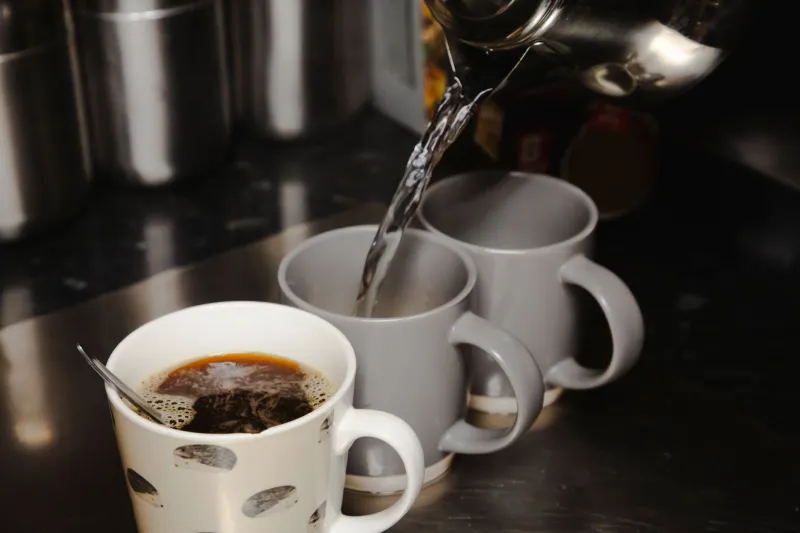
There is a moment in almost every British science documentary when the music drops, the microscope goes quiet, and somebody says the most scientifically loaded sentence in the language: “Put the kettle on.” It is not filler. It is method. In a good film, the tea break is where the team stops performing research and starts actually thinking about it.
That is the joy of British science on screen. We are promised lasers, cleanrooms and a professor striding through a wind tunnel, and what we remember is a researcher in a fleece, holding a mug with a chip in the rim, saying, “Well, that didn’t work.” The kettle becomes a small admission that science is a social activity with a heating element.
The Kettle as Co-Author
Glossy lab montages tell you that science is smooth. Tea breaks tell you it is a group project with uneven handwriting. Someone makes the brew, someone else remembers the missing control, and a third person stares into the steam until the obvious flaw in the experiment reveals itself. That is not dead air. That is peer review with milk.
So here are six British science films and filmed science settings where the tea break does the heavy lifting — not because the science stops, but because it finally gets a chance to breathe.
1. Rough Science: Fieldwork With a Flask
rough Science took scientists to remote places and asked them to solve practical problems with limited kit. The drama was never just the gadget; it was the huddle. A flask appears, a waterproof is unzipped, and suddenly the team is rethinking the whole build because someone has remembered, between sips, that the battery will die before lunch.
The brew is a portable laboratory. It gives the film a rhythm: attempt, failure, kettle, rethink. Very British, very useful, and considerably more honest than a slow-motion shot of a pipette.
2. Bang Goes the Theory: The Mug as Safety Briefing
Bang Goes the Theory specialised in making science feel like a workshop with a camera in the corner. Before anything exploded, there was usually a moment of human calibration: a mug on a table, a presenter pulling a face, a producer hovering just out of shot. The tea break is where the risk assessment becomes conversation rather than paperwork.
It also gives the audience a way in. We may not have a van de Graaff generator in the shed, but we do know how to stand around a mug and ask, “Are you sure that’s a good idea?”
3. Horizon: The Canteen Table as Idea Lab
Horizon has spent decades proving that the most cinematic location in British science is not always the telescope; sometimes it is a table with four chairs and a tray of mugs. A researcher explains the problem, someone else disagrees, and the camera keeps rolling. The tea is doing what a good editor would otherwise have to manufacture: it creates a pause long enough for an idea to arrive.
Those scenes are a reminder that science films are often at their best when they stop trying to be films and let the people be people. The mug is not a prop. It is a permission slip.
4. The Royal Institution Christmas Lectures: Backstage Brew, Front-of-House Nerve
The Christmas Lectures are not a documentary series, but they are filmed British science at its most theatrical. Behind the demo, before the doors open, there is always the suggestion of a brew and a final mumbled check: “Have we got the spare?” The tea break is the bit between rehearsal and performance, where confidence is topped up like a urn before a church hall quiz.
On screen, that warmth matters. It makes the lecture feel less like a coronation and more like a very clever friend showing you something odd in their kitchen.
5. The Secret Life of Waves: The Coastal Flask
Science films love a coastline, but they love a coastline with a thermos even more. In the quieter observational documentaries, the tea break is where the presenter stops narrating and starts listening. A flask is opened, a coat is pulled tighter, and the sea continues doing whatever it was doing before the crew arrived.
That is a healthy corrective to the idea that science is all intervention. Sometimes the most useful thing a researcher can do is stand still, drink something hot, and watch.
6. Food Unwrapped: The Lab Bench With a Biscuit
Food Unwrapped is not a lab documentary in the strictest sense, but it understands something British science telly often forgets: the canteen is a laboratory with better seating. When the team sits down with a mug and a sample, the science becomes edible, arguable and immediate. The tea break turns a factory visit into a conversation about evidence.
It also gives us the finest of British screen tropes: the researcher who has just explained a complex process and now looks mildly disappointed by a biscuit. That is not a failure of seriousness. It is a signal that the film trusts its audience to enjoy the human bits.
Last Orders at the Samovar
The great British science film does not need to choose between rigour and warmth. The brew is not an interruption to the experiment; it is where the experiment gets discussed, repaired and occasionally laughed at. In 2026, with science television more polished than ever, that chipped mug remains a quietly radical object: proof that thinking takes time, and sometimes takes two sugars.
So next time a documentary cuts to a kettle, do not treat it as a cue to put the bins out. Treat it as the scene where the real method begins. The science may be happening in the lab, but the sense is often made at the table.