The Insert Shot Is Doing the Thinking: Six British Science Docs That Trust Their Cutaways
Photo: Dianakc, CC BY-SA 4.0, via Wikimedia Commons
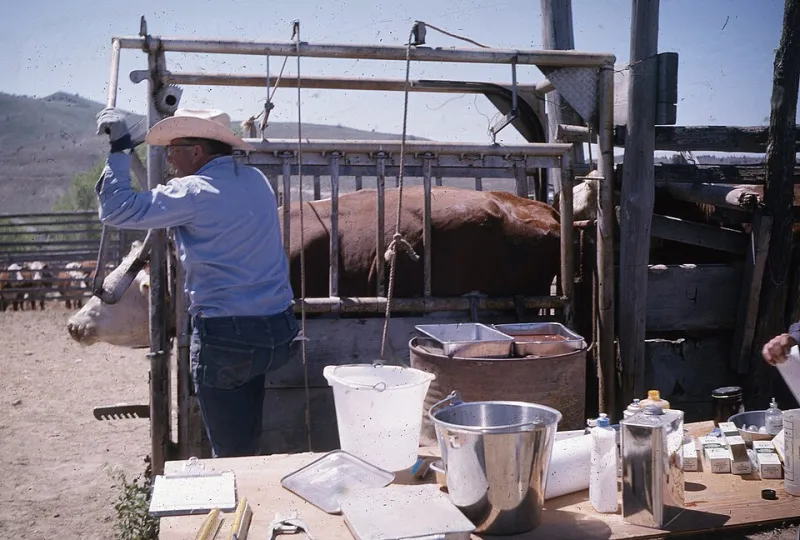
There is a particular kind of shot that British science documentaries love: a gloved hand, a dial being turned, a crystal growing in a dish. It lasts two seconds. It is usually described in the edit as B-roll. And it is often doing more scientific work than the presenter standing in front of a blackboard.
Cutaways have a bad reputation, largely because they are used as visual packing peanuts. But in the best British science films, the insert shot is not a breather between arguments. It is the argument. A narrator can say precision until the cows come home; a shot of a micrometer barrel clicking does the same job in half a second and with better posture.
The cutaway is a claim, not a nap
An insert shot is a small piece of evidence. It shows that something happened, that a process has steps, that a person has hands and those hands are wearing gloves. It compresses time, hides an edit, or implies causality. It can also lie by omission. A generic lab shot from a stock library can make a shed in Slough look like a clean room. A timelapse of crystals can make a messy precipitation look like destiny.
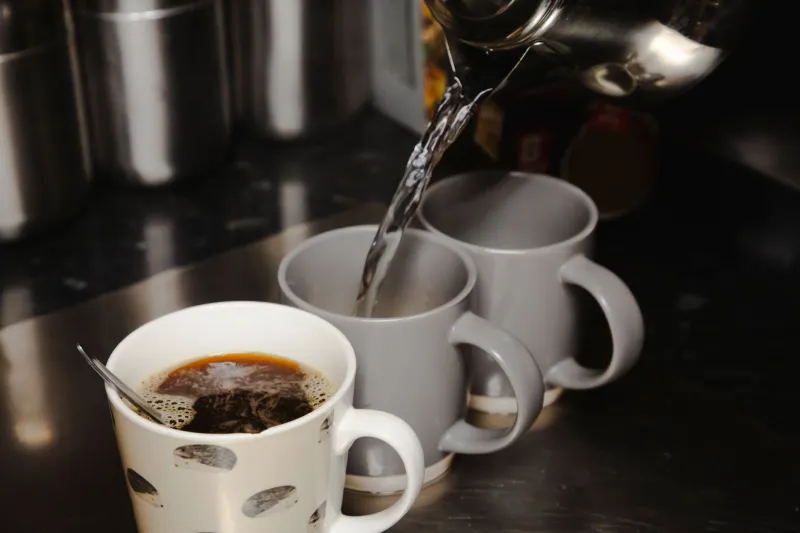
Editors know this. One of the quiet pleasures of British science telly is the way a cutaway can turn a sentence into a demonstration. The presenter says the word catalyst, and we cut to a drop of liquid hitting a beaker. The word is now a thing. The thing is now a fact. The fact is now a shot of a beaker.
Six docs where the insert earns its keep
1. Chemistry: A Volatile History (BBC Four, 2010)
This series is full of powders, flames and period instruments, and its inserts are ruthlessly practical. A flame changes colour; a residue forms; a balance trembles. The cutaways do not just decorate the history of chemistry. They make the abstraction of an element feel like a substance that can be weighed, spilled or set on fire.
2. Precision: The Measure of All Things (BBC Four, 2010)
Precision is a documentary about the bureaucracy of truth: metre bars, atomic clocks, calibration rooms. Its inserts are full of dials and machined metal. The cutaway is the perfect form for this subject. A twitch of a needle is a measurement; a measurement is a claim; a claim is a documentary. The film understands that the second most interesting thing in a lab is the instrument, and the first is the hand that trusts it.
3. The Secret Life of Waves (BBC Four, 2011)
Waves are difficult to film because they are mostly a behaviour rather than an object. The solution is a tank, a slow-motion camera and an insert of water doing something orderly. The cutaway makes the invisible visible. It also makes the viewer feel clever, which is a legitimate documentary pleasure.
4. The Story of Science (BBC Four, 2010)
This series uses manuscripts, instruments and anatomical drawings as inserts, and the effect is forensic. A page is not just a page; it is a witness. The cutaway turns history into evidence, and the presenter into a tour guide at a crime scene.
5. The Cell (BBC Four, 2009)
The gloved hand is the star of this one. Petri dishes, eyepieces, pipettes: the inserts are a grammar of care. They say that biology is done by people who are trying not to contaminate anything. That is not glamorous, but it is true, and the programme knows it.
6. The Brain: A Secret History (BBC Four, 2010)
Here the inserts are electrodes, scans and the surfaces of machines that look expensive and slightly annoyed. The cutaway does the work of reassurance: someone is measuring something. Whether the measurement means what the narrator says it means is another question, but the shot has already made its case.
When the insert starts lying
The danger is not that cutaways are fake. It is that they are generic. A stock shot of a lab can stand in for any lab, any experiment, any decade. A timelapse can make a week of failure look like an afternoon of progress. The insert is a sentence with the verbs removed, and sometimes the verbs were the important bit.
Editors have a phrase for the shot that looks scientific without proving anything: the noddy with a PhD. It is a useful phrase. It should be used more often.
Why the best ones feel like thought
The best B-roll makes the lab feel like a mind at work. A dial twitch is a decision. A gloved hand is a hypothesis. A crystal growing is an argument that the universe is willing to have, slowly, under controlled conditions. That is not filler. That is the film thinking out loud, one insert at a time.