When the Demo Went Sideways: Five Live Science Telly Moments Brits Still Talk About
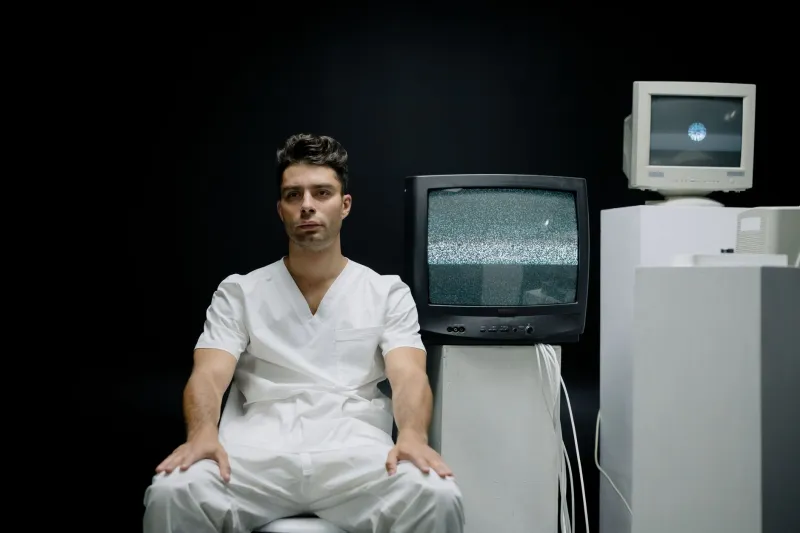
Live science television is a magnificent exercise in controlled optimism. You rehearse the demo, label the beakers, brief the presenter and then discover that a camera countdown is the most effective solvent known to science. As of 2026, the clips still do the rounds: a smoking gadget, a presenter smiling through a small catastrophe, an animal refusing to behave like a prop. This is not a forensic archive; it is a highly personal ranking of the moments that made British science telly feel less like a lecture and more like a lab with the door propped open.
5. The Blue Peter build that refused to build
Blue Peter taught generations that science could be assembled from washing-up liquid bottles, sticky tape and hope. The exact episode matters less than the archetype: a homemade contraption, a presenter in a sensible jumper, and a demonstration that declines to demonstrate. The hovercraft hovers approximately nowhere. The rocket car sulks. The presenter says something like 'here is one I made earlier' while quietly nudging the evidence with a shoe. It is science communication as village fete: slightly wobbly, deeply British and entirely charming. The lesson is not that the build failed, but that the failure was shown. Children watching learned that making things is not a straight line from diagram to triumph; it is a series of small negotiations with gravity and glue.
4. The Sky at Night versus the British sky
The Sky at Night has spent decades reminding viewers that astronomy is partly a matter of patience and partly a matter of cloud. A live telescope segment is always a gamble: the presenter has an eyepiece, a script and a country with a climate. When the heavens decline to cooperate, you get the peculiar joy of an expert filling for time with warmth, wit and a detailed explanation of what you would be seeing if the weather had read the memo. Patrick Moore was especially good at this, treating meteorological betrayal as a minor administrative matter. The rewatch value lies in the improvisation. It is a reminder that live science is not just about the object in the sky; it is about the human in the studio refusing to let a bit of drizzle ruin the evening.
3. The Christmas Lectures and the apparatus that chose chaos
Royal Institution Christmas Lectures have a proud tradition of bringing apparatus into a lecture theatre and asking it, politely, to behave. Sometimes the apparatus has other plans. A flask refuses to boil, a pump makes an ominous noise, or a demonstration of something fundamental turns into a demonstration of why labs have extraction fans. The best presenters do not hide this. They lean in, explain what should have happened, and turn the malfunction into a live lesson in troubleshooting. That is genuinely valuable science communication. Real experiments are not magic tricks with a guaranteed finale; they are questions put to the universe, and the universe is allowed to answer in smoke. The audience loves it because the expert is suddenly not a distant voice of authority but a person thinking on their feet with a fire extinguisher nearby.
2. Tomorrow's World and the robot with stage fright
Tomorrow's World was built on the promise of the future, preferably delivered before the watershed with a sense of mild danger. Its live demonstrations were part of the appeal: a new gadget, a robotic arm, a piece of domestic technology that was going to change everything, possibly by Tuesday. Then the machine would freeze, or drive into a table, or perform a task with the enthusiasm of a fridge in a heatwave. The presenter would keep talking, because that is what presenters do. The camera would stay on the gadget, because that is what cameras do. The result is a perfect little comedy of expectation. It also reveals something important about technological optimism: the future is not a polished advert. It is a prototype with a loose wire and a PR team just out of shot.
1. Springwatch and the animal that declined its close-up
Nature television is science television with fur, feathers and a complete disregard for scheduling. Springwatch has given us many live moments in which the animal is the only cast member who has not read the running order. A nest cam shows an empty twig. A presenter explains what might happen next while a creature does something entirely different in the background. The tension is exquisite. You are watching experts who know their subject, a production team trying to keep the ship steady, and an ecosystem that has no interest in being helpful. It is the most rewatchable kind of blunder because it is not really a blunder at all; it is the natural world reminding everyone that live science is a collaboration with something wilder than a camera crew.
Why the wobbles are worth keeping
These moments matter because they expose the scaffolding. A polished science film can make research look like a sequence of neat conclusions; a live failure shows the rehearsal, the risk and the improvisation. That does not mean programmes should be careless or unsafe. It means the occasional wobbly demo is not a stain on science telly; it is a reminder that science is a human activity conducted in rooms with kettles, clipboards and the occasional smell of hot plastic. The best presenters do not pretend everything is fine; they show you what fine looks like when it has gone slightly sideways. And that, frankly, is more educational than a demo that works first time.