Garageband Science: Five British Documentaries for Shed-Lab Dreamers
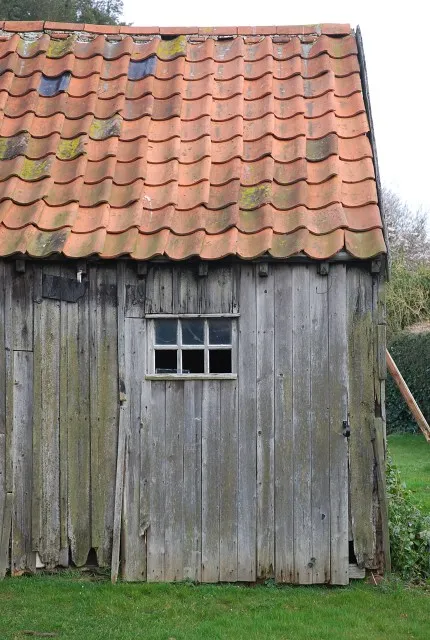
Photo: Patrick Mackie, CC BY-SA 2.0, via Wikimedia Commons
Britain has a long and proud tradition of doing science in a shed, a garage, or a spare room that was last decorated in 1987. The equipment is often held together with tape; the ambition is often enormous. Here are five British documentary routes into that world, each with a lively reason to watch and the science behind the shed door.
The Big Life Fix (BBC Two)
The pitch: inventors, engineers and designers work with people who have practical problems, then build solutions in workshops that look pleasingly like garages with better lighting. It began in 2016 and has the satisfying rhythm of a proper make-do-and-mend documentary: measure, prototype, fail, swear mildly, try again.
The science: iteration, materials, ergonomics and user testing. The interesting bits are rarely the flashy final build; they are the measurements, the cardboard mock-ups and the moment someone realises the handle is in the wrong place. That is engineering in its pants-and-tea phase.
Why UK viewers like it: because it treats invention as a social act, not a lone-genius myth. Someone makes tea. Someone else holds a ruler. A shed is never far away.
Stargazing Live (BBC Two)
The pitch: the BBC's annual astronomy jamboree, first broadcast in 2011, which regularly sends viewers out into back gardens to look up. It is part documentary, part national cloud-watching event, and entirely British in its willingness to build a live show around the phrase 'it might clear up later'.
The science: telescopes, light pollution, meteor counts, variable stars and citizen science. Amateur astronomers often do the patient, repetitive observing that professional schedules cannot stretch to. A garden telescope can contribute real data if the method is careful.
Why UK viewers like it: because it makes the night sky feel local. You do not need an observatory; you need a coat, a flask and a gap in the clouds. The back-garden breakthrough is often simply a good observation, repeated often enough to matter.
The Sky at Night (BBC Four)
The pitch: the long-running BBC astronomy programme that began in 1957 and has the gentle authority of a favourite cardigan. It is not a shed show as such, but its world is full of amateur observers, homemade mounts and telescopes in conservatories.
The science: astrophotography, variable-star observing, spectroscopy and the quiet graft of recording what changes in the sky. Citizen astronomy is a good reminder that science is not only done in big buildings; sometimes it is done by someone in a garden with a notebook and a stubborn streak.
Why UK viewers like it: because it is patient. It does not need explosions. It trusts that a person in a shed can be interesting for the same reason a person in a laboratory can be interesting: they are trying to find something out.
Springwatch (BBC Two)
The pitch: not a laboratory documentary, but one of British telly's great citizen-science engines. Since 2005 it has turned gardens, nest boxes, ponds and moth traps into a national observation network with a presenter's voiceover and a lot of hedgehogs.
The science: phenology — the timing of seasonal events — plus biodiversity recording, habitat surveys and data quality. A garden record may look small, but thousands of small records can reveal patterns that no single researcher could collect alone.
Why UK viewers like it: because it makes the back garden feel like a field station. You do not need a grant application; you need to notice what is on the buddleia. The shed-lab dream is often just a shed with a notebook in it.
Bang Goes the Theory (BBC One)
The pitch: a science magazine rather than a pure documentary, but it has the shed-lab spirit in its DNA. Running from 2009, it built demonstrations, tested claims and generally behaved as if science were something you could try at home with supervision, a ruler and a mild sense of danger.
The science: forces, electricity, materials and measurement. The best demonstrations are the ones where the explanation matters as much as the bang. It is Blue Peter energy with a risk assessment taped to the bench.
Why UK viewers like it: because it makes science look like something ordinary people can poke. That is the same appeal as the shed inventor: not the fantasy of a secret genius, but the suspicion that the person next door with a soldering iron might be onto something.
The Shed-Lab Verdict
What links these documentaries is not equipment or budget. It is the British suspicion that science is a practical activity that can happen at the end of a garden, provided you label the jars and do not lick the spoon. The back-garden breakthrough is rarely a eureka moment; it is usually a notebook, a failed prototype and a second cup of tea. That is a very British kind of heroism, and it makes excellent telly.